Green to clean. Trust the process. Especially if the liner is vinyl.
A swamp pool is not a lost cause, and it is not a permission slip to empty the chemical shed into the deep end. Green-to-clean is a process: fish out the junk, get the water in range so the shock can actually work, add what the label says, then brush, filter and retest until the water comes back.
Especially on a vinyl liner, “a million chemicals right now” is how you bleach a pattern and still have a swamp tomorrow. If the pool has sat a year or two, start with safety and a liner-and-equipment check — not a bigger scoop. Every fact on this page comes from official labels, liner-care guides, PHTA, CDC or the equipment and pool makers. If they didn’t print it, we didn’t either.
By Ryan Musch
Director of Liquid Affairs, The Fin
POOL SCHOOL · GREEN TO CLEAN
This is Pool School, not a substitute for the product label in your hand, your filter manual, or your liner’s care guide. Labels disagree on a few points — we’ll flag those — and the label always wins for the chemical you’re holding. If you can’t see the bottom, stay out. Don’t swim until the water is clear and a test shows free chlorine is back in the swimming range on that shock label, usually 1–4 ppm. If your pool is on a biguanide system, don’t reach for chlorine shock at all. That’s a different process; see our Biguanides story.
A FRIENDLY HEADS-UP
The swamp is not a sprint. And the liner is paying attention.
Chlorine that sits undissolved on vinyl can bleach it, wrinkle it and leave a weak spot. Low pH and high chlorine, left to linger, are rough on liners too. So we go in measured doses, with the pump running, and we let each chemical disperse before the next one goes in. Patience is not optional. It’s how you still have a liner when the water is blue again.
“The swamp did not show up in an hour. It will not leave in one either. Trust the process.”
Ryan Musch · Director of Liquid Affairs
THE TEMPTATION
Why “a million chemicals” makes it worse.
When the water looks like split-pea soup, the instinct is to throw everything you own at it before lunch. That’s how you waste product, cloud the water even more, and — on vinyl — scorch the very thing holding the water in.
THE SHOCK WON’T WORK
pH first, or you’re just stirring the soup.
Chlorine is a much weaker sanitizer when pH drifts high. Shock labels and PHTA both want pH in range before you superchlorinate, typically about 7.2 to 7.6. Pouring shock into high-pH water is a fancy way to spend money and keep a swamp.
THE LINER REMEMBERS
Concentration is the enemy, not chlorine itself.
Liner makers are blunt: chemicals that sit in a pile, or stay concentrated along a wall, can bleach the pattern. Two or three products added at the same time can do damage none of them would do alone. Let one chemical disperse before you add the next.
THE LABEL IS THE DOSE
Measured today. Repeat tomorrow if it says so.
Algae treatments often allow a second dose after you retest — not a triple handful “just in case.” A light green bloom can turn after one measured shock. A neglected swamp still needs brushing, filtration, vacuuming and time. That’s the process talking, not a bigger scoop.
LEAVES EAT CHLORINE
Debris first. Chemicals second.
Official shock directions for algae start with vacuuming leaves and other foreign debris, then brushing. Leaves, pollen and sludge are chlorine’s first meal. If you shock a salad bowl, the sanitizer gets eaten before it ever meets the algae.
A YEAR OR TWO OF SITTING
If the pool has been a swamp since last summer. Or the one before that.
A mid-season green bloom and a pool that sat neglected for a year or two are cousins, not twins. The process still applies — but first comes safety, a hard look at the equipment and the liner, and an honest question about whether this water, or this liner, is even the right starting point. Trust the process. Don’t skip the inspection to get to the shock.
01 · SAFETY FIRST
Stay out of water you can’t see through.
CDC’s swimming-safety rule is plain: look for the drain, and make sure you can see the bottom of the deep end. If you can’t, stay out. Unusually cloudy water can hide germs, and it can hide a person in distress. A neglected, unsanitized pool is also standing water — the kind of place Culex mosquitoes lay eggs, including in unmaintained swimming pools. PHTA says untreated, unfiltered pool water can pose risks from injuries, illnesses, wildlife and insects such as mosquitoes. Look before you lean in. If dangerous wildlife is in the water, call local animal control or wildlife management. Don’t jump in after it.
02 · EQUIPMENT
Inspect before you flip the switch.
Look over the pump, motor, filter, hoses and o-rings, and any cracked or weathered parts, before the system comes back on. Pump makers want the wiring inspected after a long shutdown, and a qualified person to repair damaged wiring. Never run the pump dry. Know where the shutoff is. If the wiring or the GFCI is in doubt — or the pad has sat through seasons of weather — have a qualified electrician check it. CPSC calls inspection, detection and correction the best protection around a pool, and it wants GFCIs tested and a qualified electrician on aging or uncertain wiring. Wet hands and a mystery circuit are not a DIY moment.
03 · DEBRIS & SLUDGE
A year’s leaves do not belong in the filter.
Net the surface. Empty the skimmer and pump baskets. Vacuum heavy muck and sludge to waste, not through the media — Waste sends that water out the waste line and never into the filter tank. PHTA’s abandoned-pool precautions start with skim, vacuum, scrub, brush and backwash to get organic matter out, and with making sure the filter can actually work. Then the shock has a fighting chance, instead of a salad bowl for lunch.
04 · THE LINER
Check the vinyl before the chemistry.
Look — gently — for brittleness or a chalky feel, wrinkles that won’t relax, tears, a faded or stained pattern, and shrinkage. If the water dropped or evaporated, the liner can pull out of the track or down the wall so you can see the structure behind it. Liner makers warn that a pool left low or empty can shrink the vinyl, tear it at fittings or corners, and, on an emptied above-ground, leave the wall open to wind damage. Check steel walls and the frame for rust and corrosion while you’re there. If the liner is stiff, cracked, alligatored, or won’t stay in the track, chemistry will not un-bake it. That’s a replacement conversation — see our Caustic Embrittlement & Pool Liners story, and Latham’s own replacement signs.
05 · OLD WATER
It may need a drain. That is not a solo project.
Test more than pH and chlorine. Years of tablets can leave stabilizer (CYA) so high that chlorine is handcuffed; dissolved metals can stain vinyl. HTH’s official fix for chlorine lock is a partial drain and refill. Findlay and LOOP-LOC want metals tested because they stain. But liner and pool makers are blunt: do not drain a vinyl or above-ground pool — especially an older liner — without talking to a professional first. Draining can shrink the liner, rip it, or pull it from the track. Talk to The Fin before you pull the plug.
06 · CALL US WHEN
Some swamps need a crew, not a Saturday.
Text us if you can’t see the bottom, if there’s wildlife you shouldn’t handle, if the wiring or GFCI makes you pause, if the liner is brittle, torn or leaving the wall, or if the water looks so far gone that a drain might be kinder than a chemical siege. A neglected pool is a longer job than a mid-season green. HTH says even a normal opening can take days to a week, depending on the water. That’s not failure. That’s the process, with more chapters.
THE FIN TAKE Send me photos of the liner, the equipment pad and the water. We’ll tell you whether this is a Green to Clean, a drain we should supervise, or a liner conversation. Do not drain it first and call us second.
THE PROCESS
From swamp to swim. In order.
This is the loop the labels actually describe. It is not a race. If the pool sat a year or two, do the neglected-pool checks first, then come back to this loop. If your pool is on biguanide, stop here and come see us — chlorine shock doesn’t belong in that water.
01 · DEBRIS
Fish out the junk.
Net the surface. Empty the skimmer and pump baskets. Vacuum what you can see off the floor. Brush visible algae with a brush that’s safe for your surface. You’re lowering the organic load so the shock has a fighting chance, and you’re getting algae off the walls so the chemical can reach it.
02 · TEST & pH
Balance first, so the shock can work.
Test pH, alkalinity and sanitizer. Bring pH into about 7.2 to 7.6 — that’s the band Water Chemistry 101, liner makers and many shock labels agree on — and give it time to circulate. HTH’s green-water steps even say wait at least an hour after the pH adjustment before you shock. High pH makes chlorine a weak handshake.
03 · SHOCK
Measured doses. The label, not panic.
Use a pool shock product, at the rate on its label, with the pump running. Evening is a common direction, because sunlight burns chlorine off. If granules settle, brush them off the surface immediately. Some labels say broadcast; some say pre-dissolve. Do what that label says, and never pour a pile against the liner wall. Then retest. Additional treatments may be required. That’s not failure. That’s the process.
04 · BRUSH & FILTER
Keep the water moving, and the filter honest.
Brush again after you shock. During a green-to-clean, run the pump and filter continuously for at least 24 hours and until the water clears. In a normal season The Fin’s house rule is at least 16 hours a day; a swamp gets the overnight shift too. As pressure climbs, backwash a sand or D.E. filter, or clean the cartridge. A packed filter is just a very expensive ornament. Our Pool Filters story and our Multiport Filter Valve story pick up from there.
05 · RETEST
Then wait. Then test again.
Don’t swim until free chlorine is back in the swimming range on the shock label, usually 1–4 ppm. Never go by the clock alone. If the water is still green, some labels say to repeat the treatment. If it’s cloudy but the sanitizer is in range, you’re in clarifier-or-floc territory, not “one more mystery bottle” territory.
06 · FINISH
Vacuum, clean the filter, hold the line.
Vacuum the dead stuff. Clean or backwash the filter again. Once you’re back to a normal residual, keep it there. Some shock and green-water labels call for an algaecide only after chlorine has come back down — high chlorine can knock the algaecide out before it works. Follow that order. Then keep testing, because a swamp likes to try for a sequel.
THE FIN TAKE If you’d rather not spend a week starring in your own science project, text me or book The Fin’s Green to Clean service. We run this process for a living. No, we will not “just pour more in.”
AFTER THE ALGAE IS DEAD
Clarifier and floc are not the same bottle.
Once the sanitizer has done its job, the water can still look like lemonade. That’s often dead algae and other fines that are too small for the filter to catch. A clarifier and a flocculant both make particles clump. They do not replace shock, and they are not interchangeable.
CLARIFIER
The filter does the work.
A clarifier binds fine particles into slightly larger ones so your filter can catch them. Use it when the water is hazy, chemistry is in range, and the filter is actually clean. Run the filter as the label directs — often a continuous stretch of hours, not a quick spin. Don’t expect it to clear a living swamp by itself.
BEST WHEN The water is mildly to moderately cloudy, or you’re cleaning up after a shock and don’t need (or can’t do) a vacuum-to-waste.
FLOCCULANT
It drops. You vacuum to waste.
A flocculant clumps particles into heavier masses that sink to the floor. You circulate it briefly, shut the pump off so the bloom can settle — often overnight — then vacuum that layer out on the waste or drain setting, not through the filter. If you vacuum on Filter, you just stir the mess back into the water and may load the media with goo.
BEST WHEN The water is seriously cloudy after treatment, and your valve can actually vacuum to waste. Many above-ground systems can’t. If yours can’t, use a clarifier instead.
VACUUM TO WASTE, IN PLAIN ENGLISH On a typical multiport valve, Waste sends water from the pump straight out the waste line. It never enters the filter tank. That’s why floc and a heavy load of dead algae belong there. Stop the pump before you change the valve position — that’s our Multiport Filter Valve story again — and be ready to add water, because this dumps a lot of it. Then backwash or clean the filter and go back to Filter.
THE PART NOBODY WANTS TO HEAR
It takes days, not hours. That’s not us being dramatic.
A light green pool may turn after a single measured shock. A true swamp still has to be shocked, brushed, filtered, vacuumed and retested. Dead algae doesn’t vanish. It becomes a cloud that the filter, or a vacuum-to-waste, has to remove. The filter will load up and need cleaning. Mustard and other stubborn algae may need a repeat treatment a few days later. Free chlorine has to come back down before anyone swims.
SHOCK, THEN WAIT8–24 hrs
FILTER UNTIL CLEAR24 hrs+
STUBBORN ALGAEDays
Those first two windows are typical official guidance — test, don’t guess, before anyone swims. Continuous filtration until the water clears is the move, not a two-hour cameo. A repeat dose, more brushing, or a floc-and-vacuum can stretch a real swamp into a multi-day job.
Cloudy an hour after you shocked is not a cue to empty another bucket into the deep end. That’s the water mid-process. Trust it — or text us and let The Fin finish it.
A pool that sat a year or two is a longer clock. Inspections, a heavier vacuum-to-waste, tests for CYA and metals, and — only with a pro — a possible partial drain all add chapters. That’s the section just above, not a reason to dump more product tonight.
VINYL LINER CARE
The liner is not a mixing bowl.
Most of the pools we sell and service at The Fin are vinyl. A swamp is already a stressful week for that liner. A chemical dump makes it a worse one. This is the care the liner makers actually printed.
DON’T LET IT SIT
Undissolved product bleaches vinyl.
Garrett, LOOP-LOC, Findlay and Latham all warn that chlorine or other chemicals sitting on the liner can bleach the color or pattern, wrinkle it, or leave a weak spot. If the label says broadcast, do it evenly with the pump running and brush immediately so nothing parks on the floor or against a wall. If the label says pre-dissolve, add the chemical to a bucket of water — never water to the chemical — and don’t pour the slurry in one spot.
DON’T POUR AT THE WALL
A concentrated stripe is still a spill.
LOOP-LOC and Findlay say to let each chemical disperse through circulation before you add a second one. Even liquid chlorine, poured in one place and left to hang in the deep end, can bleach. Walk it around. Keep the pump on. Don’t dump anything near the liner wall “so it can dissolve there.”
LOW pH, HIGH CHLORINE
Both are rough if you let them linger.
Findlay and LOOP-LOC warn that pH below 7.0 can make a liner “grow” and wrinkle. Latham says low alkalinity and low pH can damage the liner, and that chlorine left too high for too long can pull plasticizer out of the vinyl, fade it or bleach it. Shocking is a temporary, measured step with the pool closed — not a week of leaving the residual in the stratosphere. When the algae is gone, bring chlorine back to a normal swimming residual and keep pH in that 7.2 to 7.6 band.
FOLLOW THE LABEL IN YOUR HAND
Liner guides and shock labels don’t always rhyme.
Some liner guides say to pre-dissolve granular chlorine in a bucket. Many modern cal-hypo shock labels say do not pre-mix; broadcast and brush. CDC’s current advice is the tie-breaker we use: only pre-dissolve when the product label directs it, and then add chemical to water, never water to chemical. Latham says the same thing in liner language: don’t add a solid or powder directly unless the label clearly says you may. The bottle you opened is the rulebook.
CHEMICAL SAFETY
Never mix. And add chemicals to water.
CDC’s pool-chemical safety poster is short enough to live on the shed door. We’re putting it here anyway, because a green pool is exactly when people start improvising.
Never mix pool chemicals with each other, with acid, or with any other substance — not in a bucket, not in the skimmer, not on the deck. Mixing chlorine products with acid can make toxic gas. Mixing different chlorine types can do the same, or worse.
Add chemicals to water, never water to chemicals. If a label does direct pre-dissolving, the chemical goes into the water. Water poured onto a dry oxidizer can react violently.
Open one container at a time, measure carefully, and close it before you open another. Wear gloves and eye protection. Work with ventilation. Use a clean, dry scoop that hasn’t touched something else.
The skimmer is not a mixing bowl. If a label allows skimmer addition, the pump must be running, the skimmer must be empty of other chemicals and debris, and you don’t use that method when a feeder is on the line. Contamination in a skimmer can release toxic gas or cause a violent reaction. Other labels say never to use the skimmer at all. Again: that label wins.
Store chemicals dry, separate and in the original labeled container. Keep them away from each other, away from heat, and away from kids and pets.
MORE POOL SCHOOL
This page has homework partners.
We kept this story to the swamp-to-swim process. These other pieces hold the longer versions of the chemistry, the liners and the equipment.
CHLORINE + TYPES
Chlorine, and Types of Chlorine.
What chlorine is doing in the water, and why liquid, cal-hypo, dichlor and trichlor are not interchangeable — especially when you’re shocking a green pool.
WATER CHEMISTRY 101
Water Chemistry 101.
pH, alkalinity, sanitizer, clarifier vs. floc, and why a visible algae bloom needs a shock, not just a wish and an algaecide.
CAUSTIC & LINERS
Caustic Embrittlement & Pool Liners.
What high pH and concentrated alkaline chemicals do to vinyl over time, and why balanced water is liner insurance.
FILTERS + MULTIPORT
Pool Filters and the Multiport Filter Valve.
How sand, cartridge and D.E. actually clean, when to backwash, and why Waste is the setting for a vacuum-to-waste — with the pump off before you move the handle.
BIGUANIDES
Biguanides.
If the pool is on a chlorine-free biguanide system, this whole shock playbook does not apply. Don’t mix the two chemistries.
THE FIN
Green to Clean service.
We’ll test, dose, brush, filter and vacuum so you don’t have to trust the process alone in the backyard. Text Ryan or book it. Prices stay off this page on purpose.
CDC, “Use Pool Chemicals Safely” poster: never mix chlorine products with acid or with each other; only pre-dissolve when the product label directs it; if you do, add the chemical to water, never water to the chemical, because a violent reaction can occur. Measure carefully, open one container at a time, wear protection. CDC poster (PDF). Broader storage and handling: CDC Pool Chemical Safety.
EPA-registered shock labels: HTH Dry Chlorinator Granular, EPA Reg. No. 1258-1069 (accepted Oct. 9, 2024) — do not pre-mix; add only into water, never add water to the product; broadcast with the pump running or use the label’s skimmer method (to avoid bleaching vinyl or paint) only if the skimmer is empty of other chemicals and the pump is circulating; adjust and maintain pH 7.2 to 7.6 before treatment; shock/superchlorinate at the labeled rate (that label: 5–10 ppm available chlorine); for algae, add as close as possible to the growth, then brush, vacuum and cycle through the filter; additional shock treatments may be required; do not enter until free chlorine is 1–4 ppm. BioGuard Smart Shock, EPA Reg. No. 5185-493 (accepted Oct. 13, 2015) — do not pre-dissolve; do not apply through a skimmer or feeder; adjust pH to 7.4 to 7.6 before use; for light algae, vacuum leaves and other debris, brush, broadcast with the pump running, operate pump and filter continuously for 24 hours, brush again, retest, and repeat if necessary; brush undissolved product off surfaces; chemically clean the filter 3–4 days after a resistant-algae treatment.
HTH official care pages: How to Fix Green Pool Water — adjust pH to 7.2 to 7.4 and wait at least one hour, shock, brush, run the filter at least 24 hours until the water clears, vacuum, then backwash or clean the filter. How to Shock a Pool — test and correct pH (7.2 to 7.6) first because high pH reduces shock effectiveness; keep the pump running; brush settled granules immediately (undissolved granules can bleach or damage surfaces); run the filter continuously at least 8 hours, overnight ideal; typically 8–24 hours before free chlorine is 1–4 ppm; never mix chemicals; add chemicals to water, not water to chemicals; wait until chlorine is back in range before adding algaecide. HTH Clarifier Advanced and HTH Drop Out Flocculant — clarifier clumps fines so the filter can catch them; flocculant drops debris to the floor for vacuum-to-waste, not through the filter; if the system cannot vacuum to waste, use a clarifier instead.
PHTA Recreational Water & Air Quality Committee, “ABCs of Algae” (Aqua Magazine, Aug. 2018, circulated by PHTA): green algae is often controlled by a shock of 5–10 ppm free chlorine, but mustard algae may need a repeat several days later; brush before treating so the chemical can reach the cells; backwash before treatment and clean the filter afterward; close the pool until acceptable clarity is back. PHTA on APSP-11: maintain pH 7.2 to 7.8 (ideal 7.4 to 7.6) when the pool is open for swimmers; chlorine is less effective as pH climbs; superchlorination is a permitted time to be outside the everyday ranges, with the pool closed.
Vinyl liner manufacturers: Latham, “Life of a Vinyl Liner” — never add powdered or solid chemicals directly unless the label clearly says that’s allowed; mix to a full solution in a bucket otherwise; chlorine sitting on a liner can fade, wrinkle and weaken it; excessive chlorine over a long period can fade the liner. Latham vinyl water-chemistry guidance — low pH / low alkalinity can damage the liner; chlorine left too high for too long can pull chemicals out of the vinyl and fade or bleach it. Findlay Vinyl liner care — pH 7.2 to 7.6; avoid pH below 7.0 (wrinkling); pre-dissolve slow-dissolving sanitizers and follow the product label so undissolved particles don’t spot-bleach; never mix chemicals and add them at the same time; let each chemical circulate before the next; even liquid chlorine can bleach if it concentrates in the deep end. LOOP-LOC liner care — pH 7.2 to 7.6; low and high pH both damage vinyl; never let chlorine touch the liner before it is fully dissolved; high residual chlorine can attack and bleach the liner; don’t let a concentrated mix sit along the walls or floor; circulate for several hours after the last chemical addition. Garrett liner care — chlorine abuse is a major cause of liner degradation; never let chlorine contact the liner before it is fully dissolved and dispersed; never just throw granules in.
Hayward, multiport valve functions: Waste directs water from the pump out the waste line; the water never enters the filter tank. Matches our Multiport Filter Valve story: stop the pump before every valve-position change. Hayward Power-Flo LX / Power-Flo II owner’s manual and Pentair Dyna-Pro installation guide: after a shutdown, inspect electrical wiring for damage or deterioration and have a qualified serviceman repair or replace it as needed; inspect and care for strainer-lid o-rings; never run the pump dry. Pentair and similar pump manuals: connect only to a GFCI-protected circuit; contact a qualified electrician if you cannot verify that protection; if the GFCI trips without the test button being pushed, do not use the pump until a qualified service representative corrects the problem.
Neglected and untreated pools: PHTA Recreational Water Quality Committee, “Abandoned Pools” fact sheet (April 2020) — regardless of water level, a pool that is not maintained is considered abandoned; untreated, uncirculated water can grow germs and is a breeding ground for mosquitoes and other pests; precautions include maintaining sanitizer, ensuring the filter works, and regularly skimming, vacuuming, scrubbing, brushing and backwashing; indefinitely abandoned pools that will stay out of service may be drained, cleaned and covered or backfilled to prevent stagnant rainwater (that is not a DIY first step on a vinyl pool you plan to restore). PHTA Recreational Water & Air Quality Committee, “Flooded Swimming Pools and Spas” technical bulletin (revised Sept. 2017) — do not swim in contaminated or murky water; untreated, unfiltered pool water can pose health risks from injuries, illnesses, wildlife and insects such as mosquitoes; check the pool for wildlife, and if dangerous wildlife is present, contact local animal control or wildlife management; electrical safety before cleanup includes shutting power off at the breaker and calling a licensed electrician if the panel is damaged, inaccessible, or you have questions. CDC, Preventing Swimming-related Illnesses — look for the drain and make sure you can see the bottom of the deep end; avoid unusually cloudy water. CDC, About Culex Mosquitoes and Mosquito Control in a Community — Culex mosquitoes lay eggs on permanent standing water, including unmaintained swimming pools; neglected swimming pools are a reportable mosquito source.
Electrical inspection: CPSC and American Red Cross, “Don’t Swim With Shocks” — CPSC is concerned about aging electrical wiring that hasn’t been inspected in years; have an electrician qualified in pool and spa repairs inspect and upgrade the system; protect pumps and other pool equipment with GFCIs; test GFCIs monthly; know where the shutoffs are. CPSC GFCI fact sheet.
Draining, shrinkage and liner replacement: Findlay Vinyl — do not drain the pool completely for any reason without consulting a pool professional; older liners are at higher risk of shrinking and ripping; high water tables add structural risk; test for dissolved metals, which can stain vinyl. LOOP-LOC — never lower the water to less than about a foot in the shallow end; if water pressure is removed, the liner may shrink, tear around fittings or corners; call a pool professional first; draining may void the warranty; metals can stain. Garrett — never drain below about one foot in the shallow end, even briefly, or the liner may shrink and tear. Latham, “Life of a Vinyl Liner” — never drain more than a few inches below the skimmer for winter, and never drain all the water to clean the pool; replacement signs include fading until the pattern is gone, the liner separating from the bead or pulling out of the tracking so the wall shows, repeated patching, and tearing in the corners. Doughboy Pearl River limited warranty (and the liner warranty it cites) — do not empty the pool because of potential liner damage; a pool left standing empty is also exposed to severe wind damage; leaks that drop the water level can damage wall and frame components; some sanitizing systems can cause premature rust and corrosion of metal parts.
CYA, metals and a longer clock: HTH, How to Turn Green Water Blue (pool-opening guide) — opening can take a few days up to a full week depending on water condition; start at least a week before you plan to swim; high CYA from repeated stabilized shock causes chlorine lock, and “the only fix at that point is a partial drain and refill.” PHTA Recreational Water Quality Committee, “Metals and Metal Staining” (Aqua Magazine, Aug. 2020): test for metals; one official way to reduce dissolved metals is removing and replacing a portion of the water. Consistent with Water Chemistry 101 on CYA and metals. This page does not treat that drain as a backyard first move on vinyl.
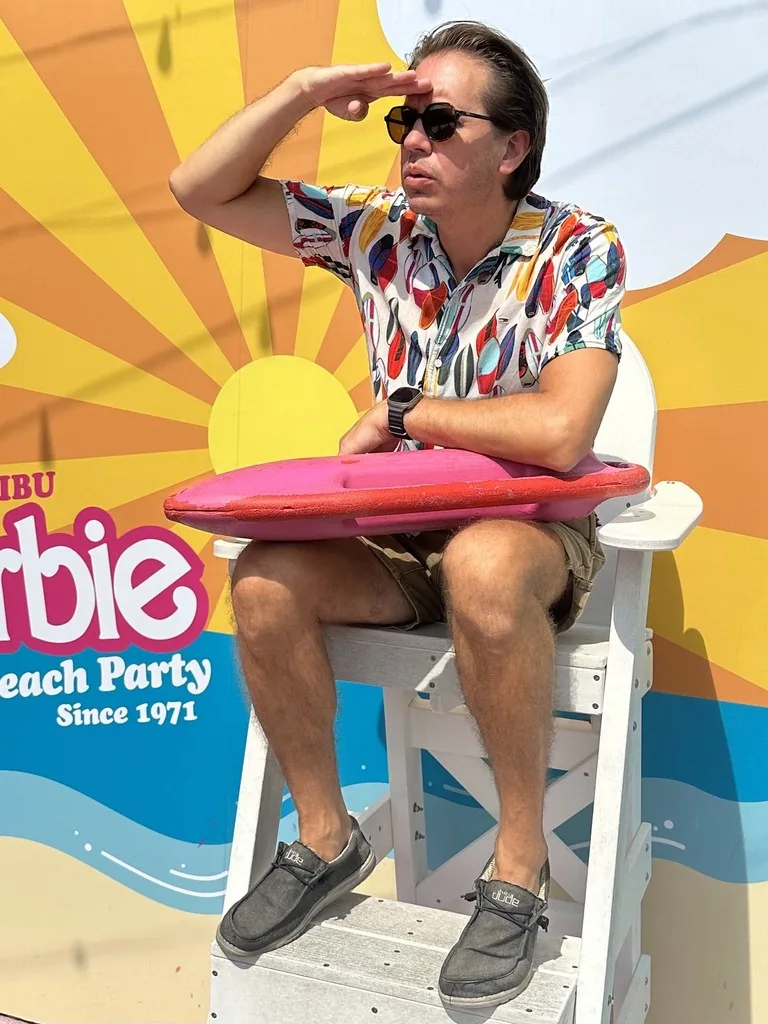
Sources checked November 15, 2026 (America/Chicago). Ryan portrait supplied by The Fin, from the approved-bio set (lifeguard chair, pink rescue buoy, surfboard-print shirt; not the bow-tie / blue-drink photo). Pull quote authored for this page. No prices included. This page is Pool School education, not a substitute for the product label, the filter manual, or the liner’s care instructions. Where a liner guide and a shock label disagree on pre-dissolving versus broadcasting, this page follows the product label, which is also CDC’s rule and Latham’s exception. Everyday free-chlorine targets differ among liner makers (LOOP-LOC, Findlay and Latham are not identical), so this page does not pick one number as universal; after a shock, use the re-entry range on the shock label, then hold the everyday residual your liner maker specifies. The 16-hour daily pump runtime is The Fin’s in-season service recommendation, consistent with our Caustic Embrittlement & Pool Liners, Pool Filters, and Multiport Filter Valve stories; the continuous 24-hour run during a green-to-clean comes from official shock and green-water directions. PHTA’s “drain, clean, and cover or backfill” language is for indefinitely abandoned pools that will stay out of service, not a first step on a vinyl or above-ground pool you plan to restore. HTH and Water Chemistry 101 describe a partial drain and refill as the usual fix for chlorine lock from high CYA, and PHTA lists water replacement as one way to lower dissolved metals — but liner and above-ground pool makers warn not to drain without a professional, because the liner can shrink, tear, or pull from the track. This page tells you to talk to The Fin before draining. PHTA’s flood bulletin names snakes and other wildlife in standing pool water, especially after floodwaters recede; this page uses the broader untreated-water wildlife warning and the instruction to call animal control if dangerous wildlife is present, and does not import flood-specific animals as a Tulsa default. Official sources name wildlife, pests and mosquitoes; they do not specifically name frogs, so this page does not either.
Got a swamp that’s been sitting, or a vinyl liner you’d rather not experiment on?
Text Ryan, or book a Green to Clean. We’ll trust the process with you.